
Technical Data Sheets
Here we have all the technical sheets currently available for the film we stock for you to download for free.
Click Here To Jump Straight To The Tech Sheets
What is a technical data sheet?
A technical sheet is produced by the manufacturer to provide information to users and labs for how to get the best out of the products they sell. They are essential for those looking at doing long exposures or developing at home.
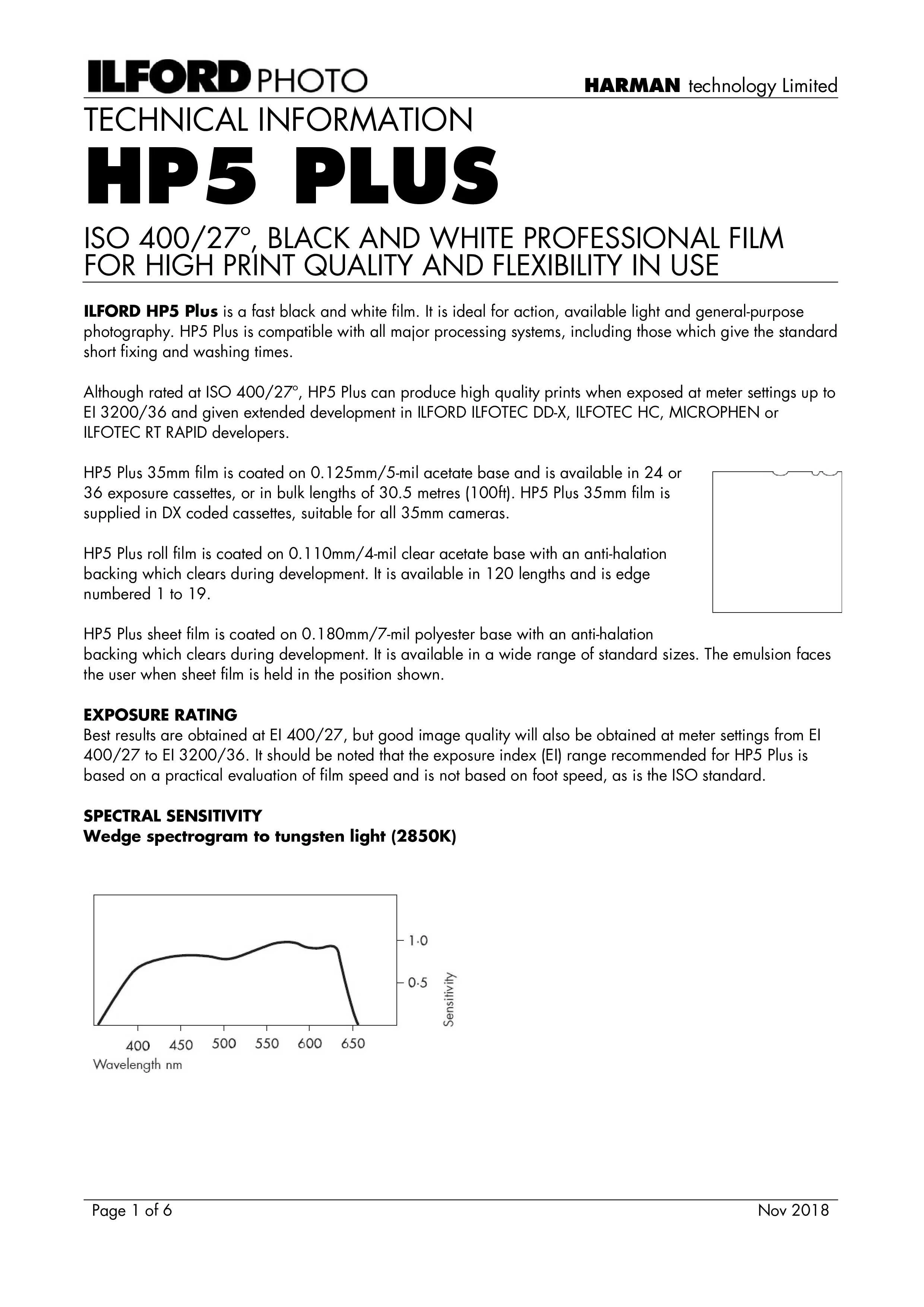
They always start with a brief introduction to the film covering:
The films characteristics
This is great if you’re looking at buying a new film and want to see how it looks and behaves.
The ISO
Any push/pull characteristics
Formats the film is available in.
This isn’t always provided but providing the emulsion is the same (HP5+ in 35mm or 120 for example) then the information should be transferable.
Film sensitivity and filters
Particularly on colour films you’ll find out if the film is daylight balanced or tungsten balanced and any filters needed to correct white balance.
One of the most useful parts of the technical sheet is the part detailing the reciprocity failure of the film. This is jargon for how the sensitivity of the film changes as its exposed to light. This is useful if you are doing long exposures. If you’re not doing long exposures then you dont need to worry about this.
Because film gets less sensitive the longer its exposed to light you need to add time on to the exposure.
Lets look at the HP5+ tech sheet to see how we need to do this if we were taking a long exposure on HP5+
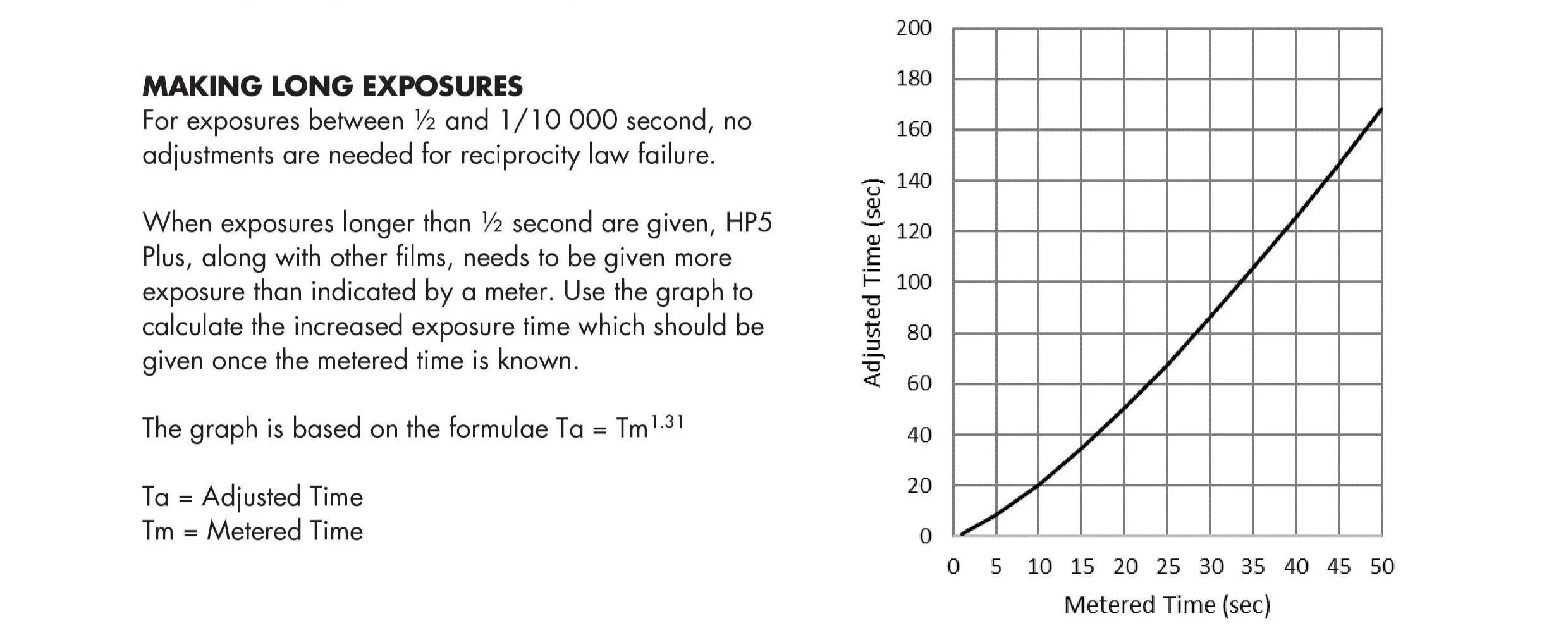
So lets say we want to photograph some light streeks from cars driving at night. We add an ND filter to the front of our camera and with a light meter adjusted to our settings it tells us the shutter needs to be open for 30 seconds.
We then check our chart and we see that we actually need to have the shutter open for around 85 seconds to get enough light on the film.
We might do it another way and decide that due to what we’re photographing we would like the shutter open for 60 seconds. In which case we can look across from actual time and see that we need to adjust the camera aperture or ND filters so we get a meter reading of 22 seconds. Then we take a 60 sec exposure.
The last few pages of the technical sheet are about processing the film which is essential reading if you develop your own film at home. We’re not going to touch on this as if you develop at home then you probably already have a good idea of what this all means.
Technical Sheets To Download
Please note: not every company produces technical data sheets and even if they do not every film necessarily gets one. If you have any questions not answered here please contact us.