
One of the most impressive claims about Ilfords XP2 film is its ability to be shot in a range of conditions, at different ISOs all on the same roll and then processed as normal without having to push or pull the film (which is to develop for different times to render a usable image on the film). Ilford themselves claim that it can be shot between 50 and 800 iso without affecting the image quality. But when we saw a mishap online where someone loaded the film into their camera incorrectly and created a 36 shot multiple exposure we knew we had to test the film to see just how adaptable it is.
The test was simple: 13 shots taken on 120 film of the same scene at the same time, increasing by one stop at a time. For simplicity we’ll describe the changes as if changing the ISO, in reality a meter reading was taken and then we stopped down as much as possible, opening the lens one stop for each image until we reached F8, then the shutter speed was changed to increase the light by one stop.
Therefore we shot the first shot at the equivalent ISO of 6400, then added one stop of light the equivalent of 3200, and so on until we reached the ISO equivalent of 1.6, eight stops over exposed. The full range of iso shot at was 6400, 3200, 1600, 800, 400, 200, 100, 50, 25, 12, 6, 3, 1.6.
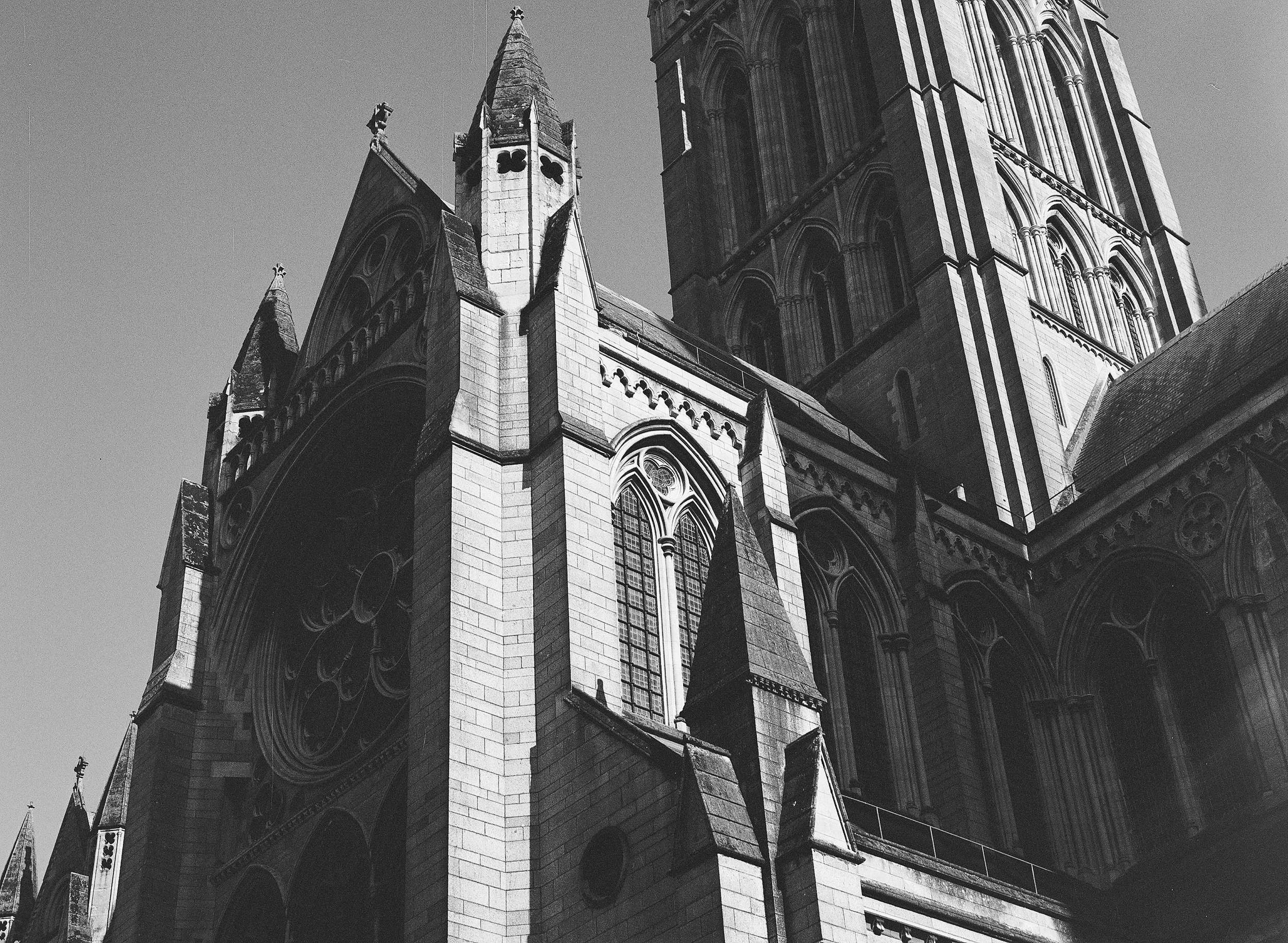
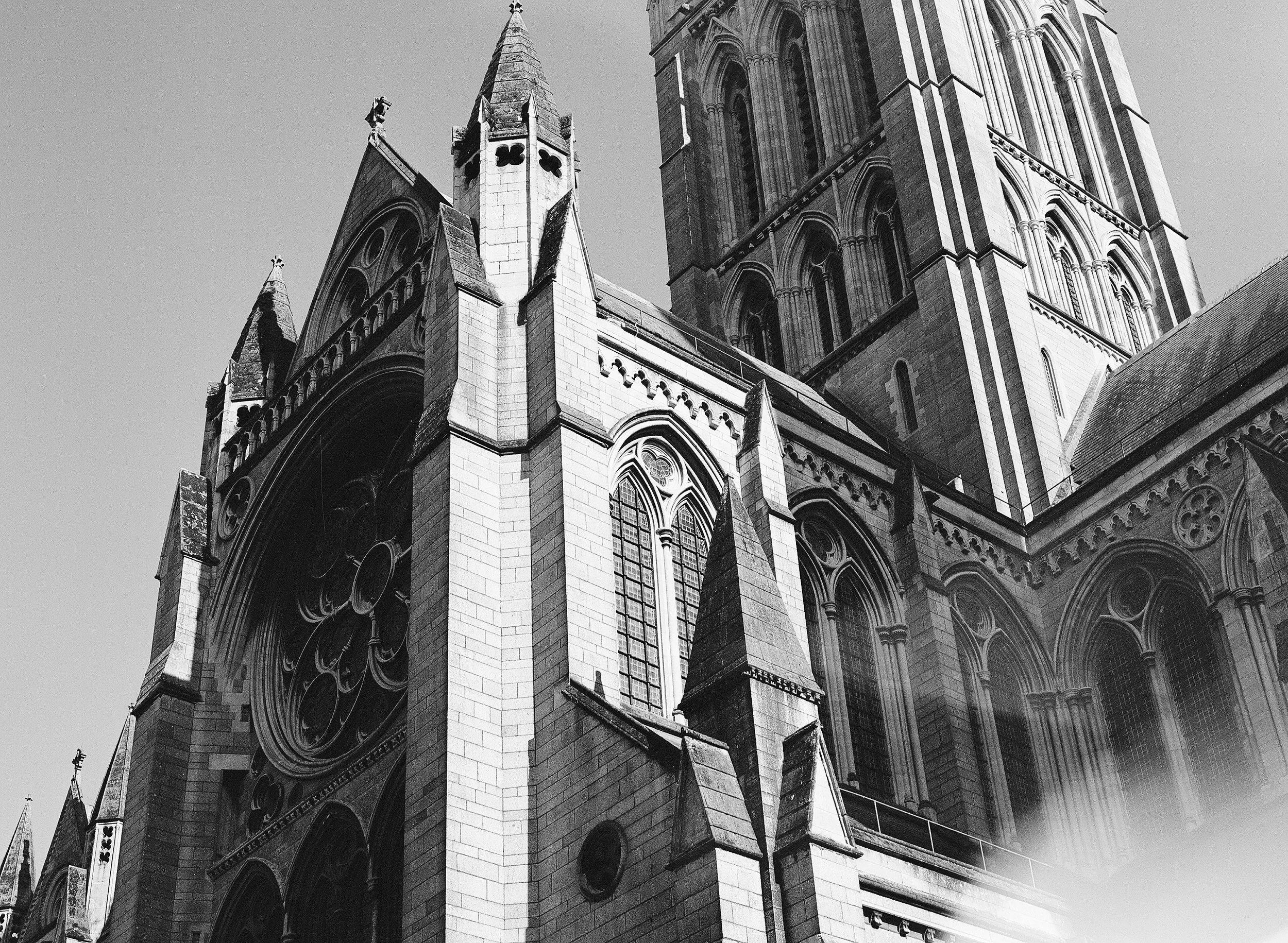
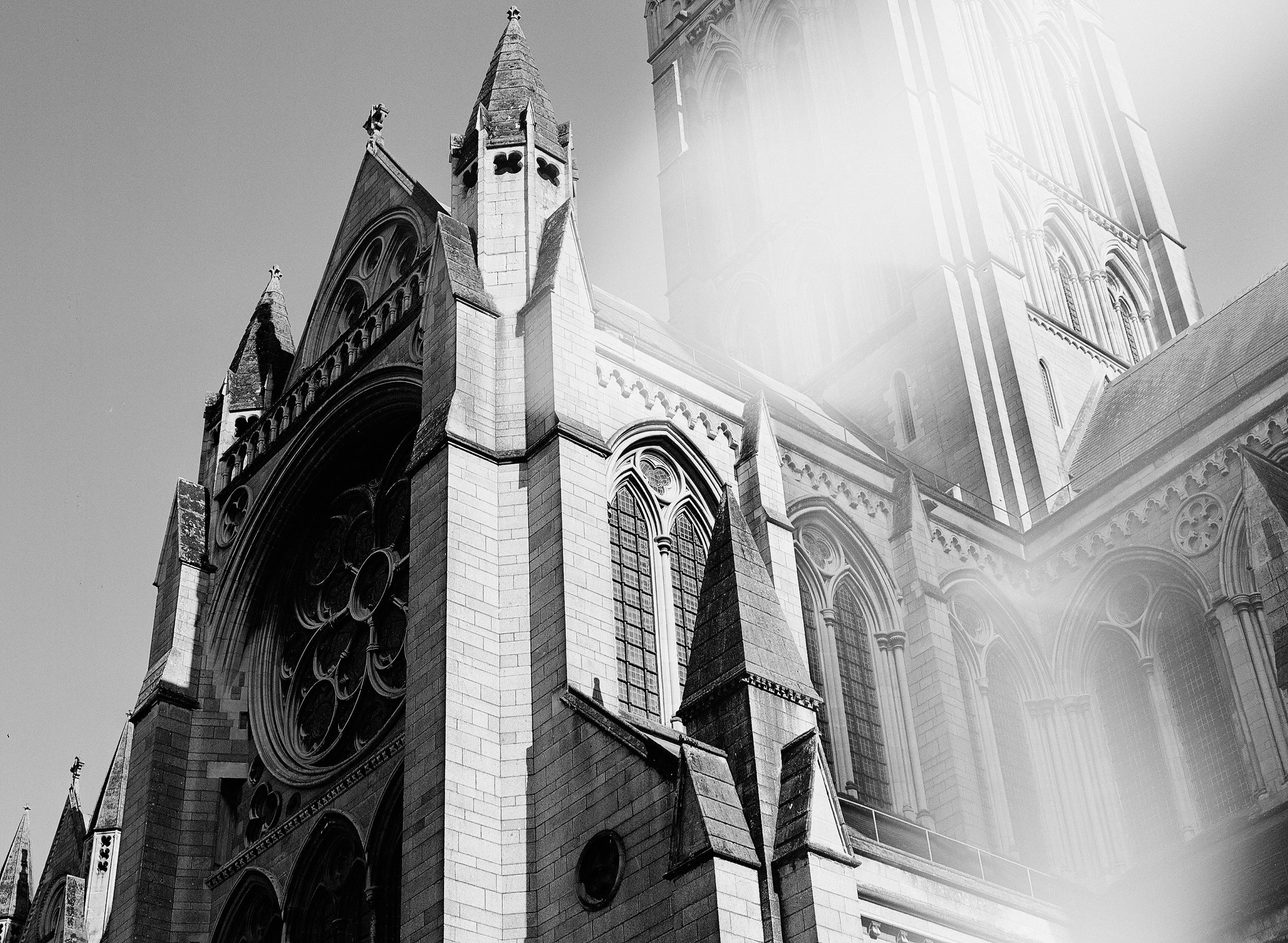
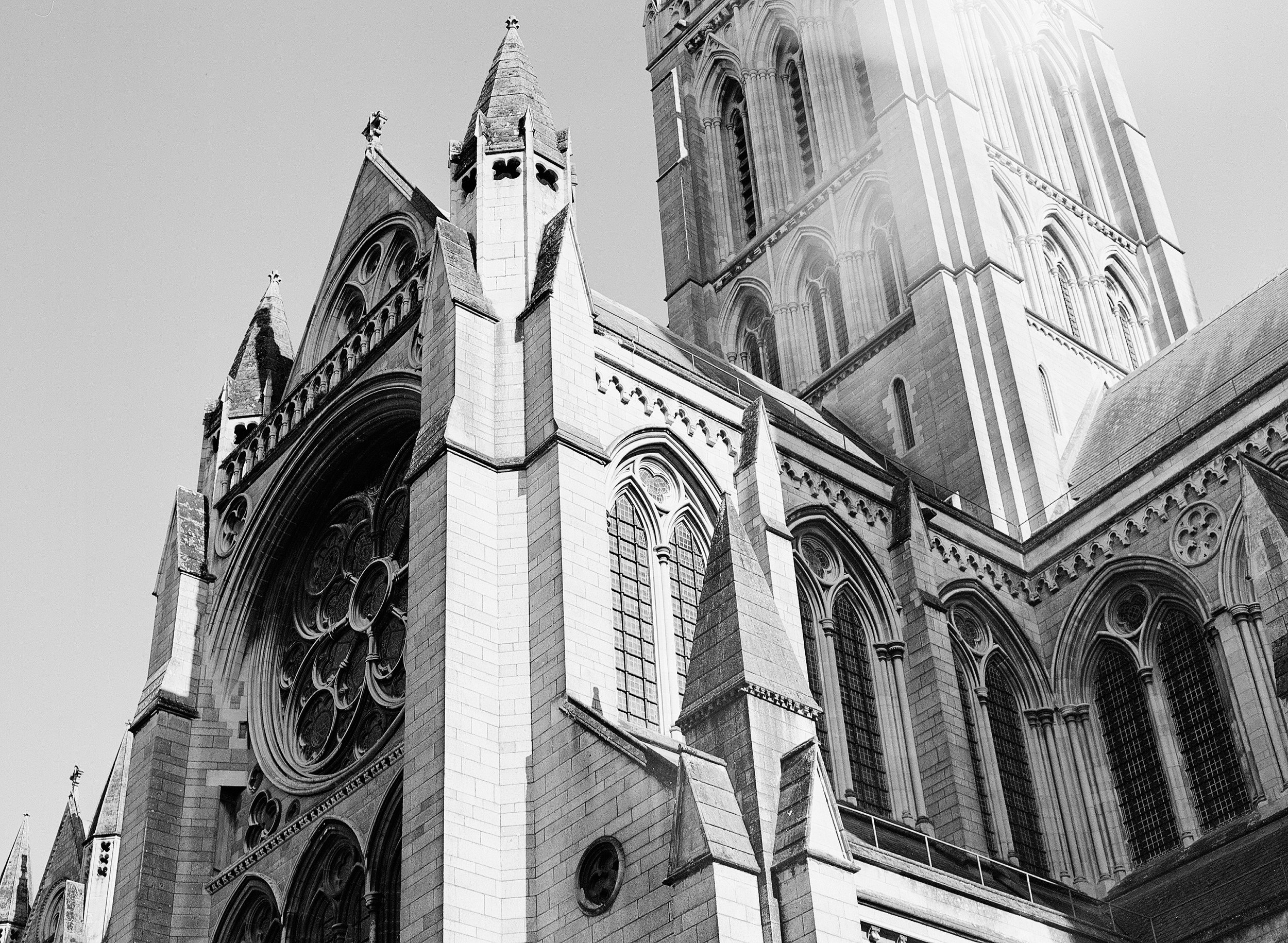
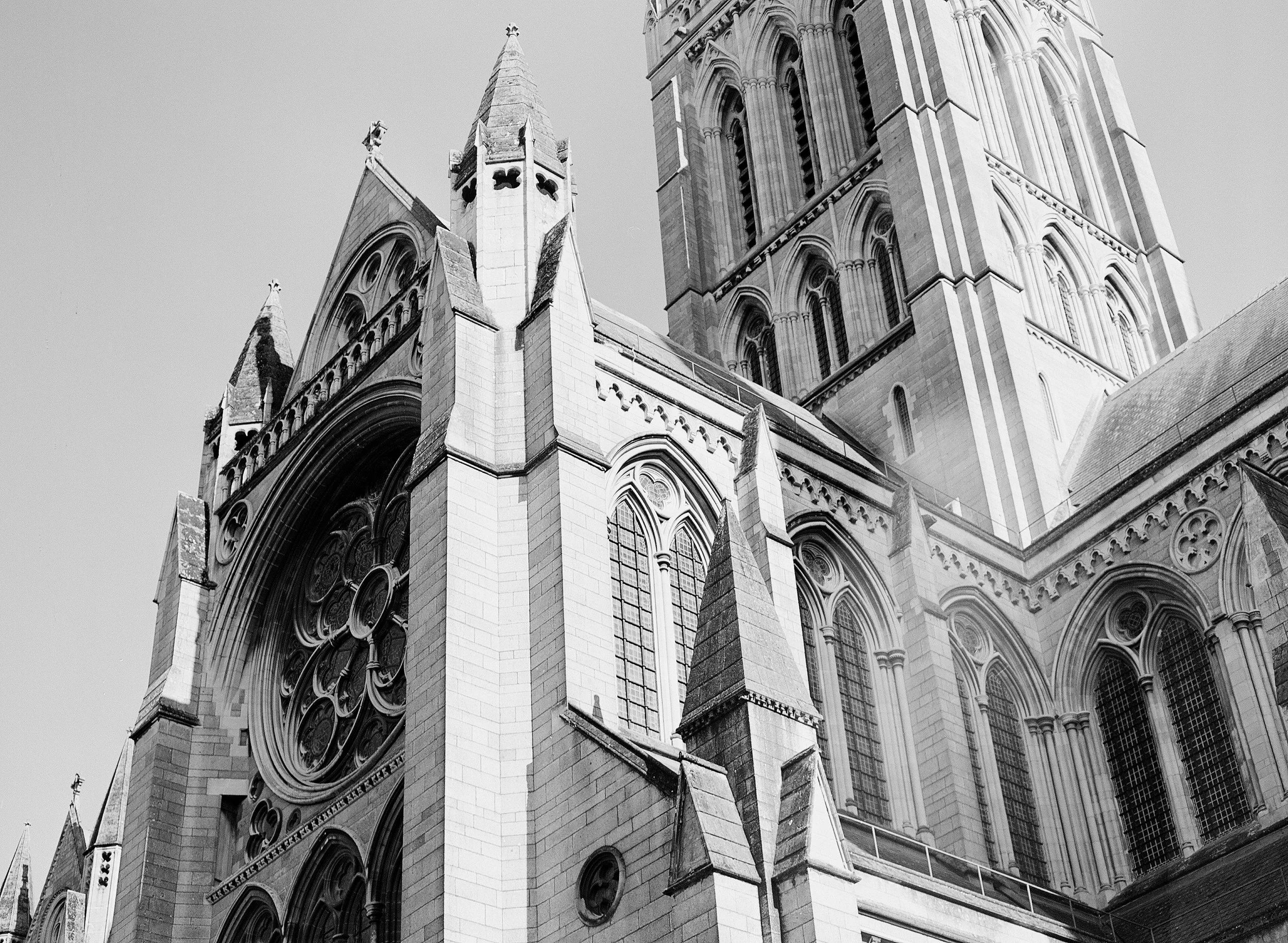
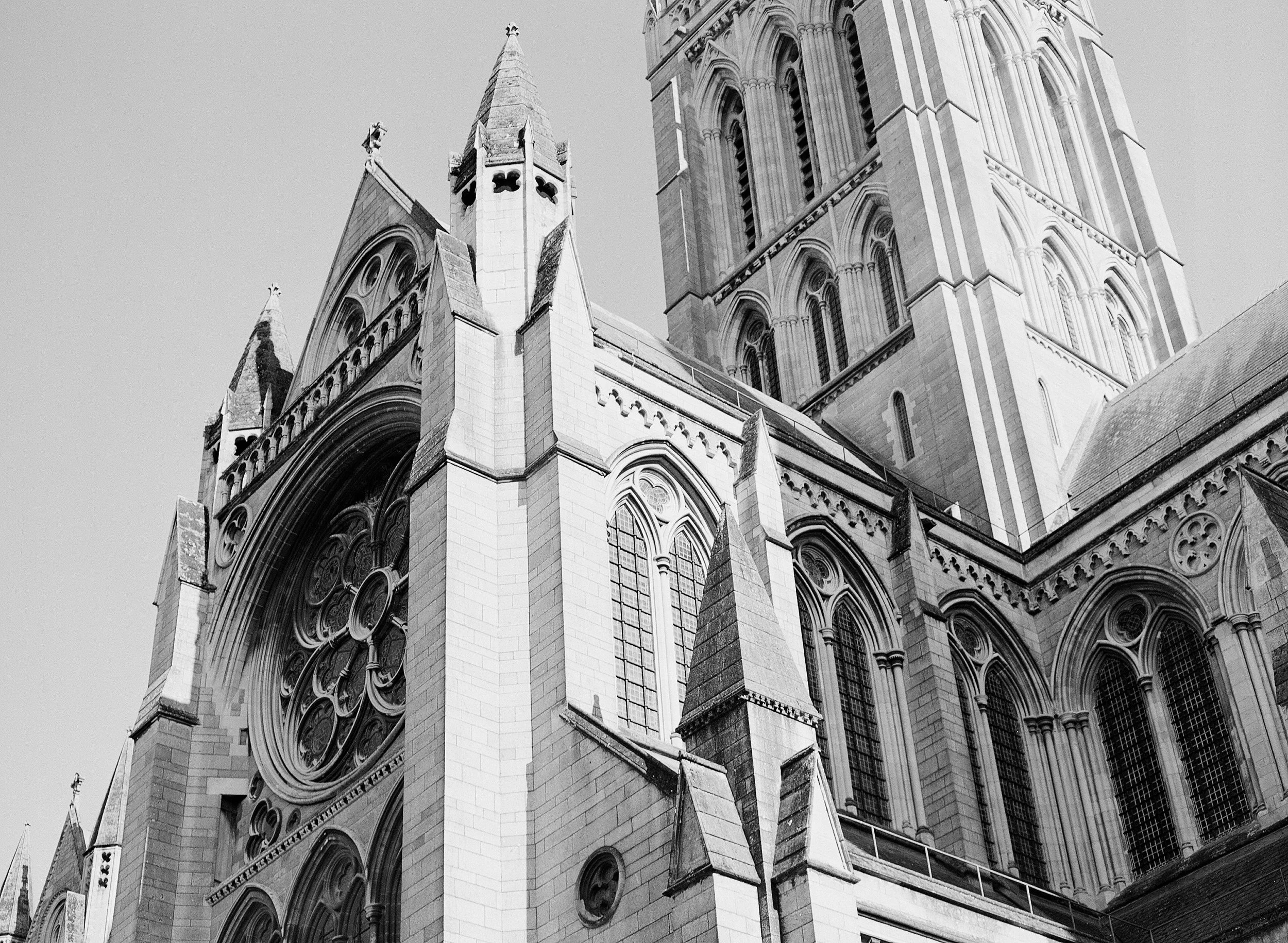
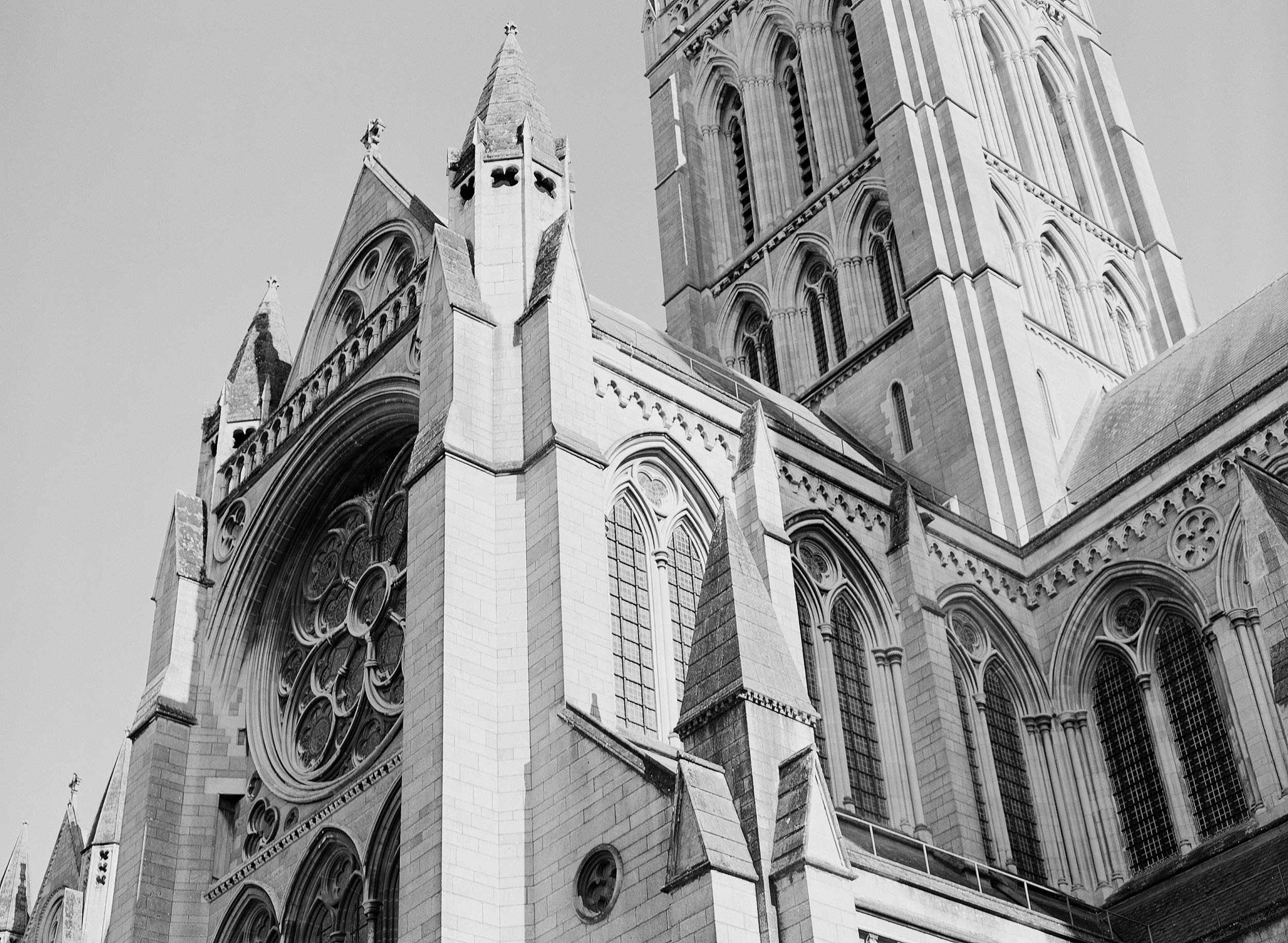
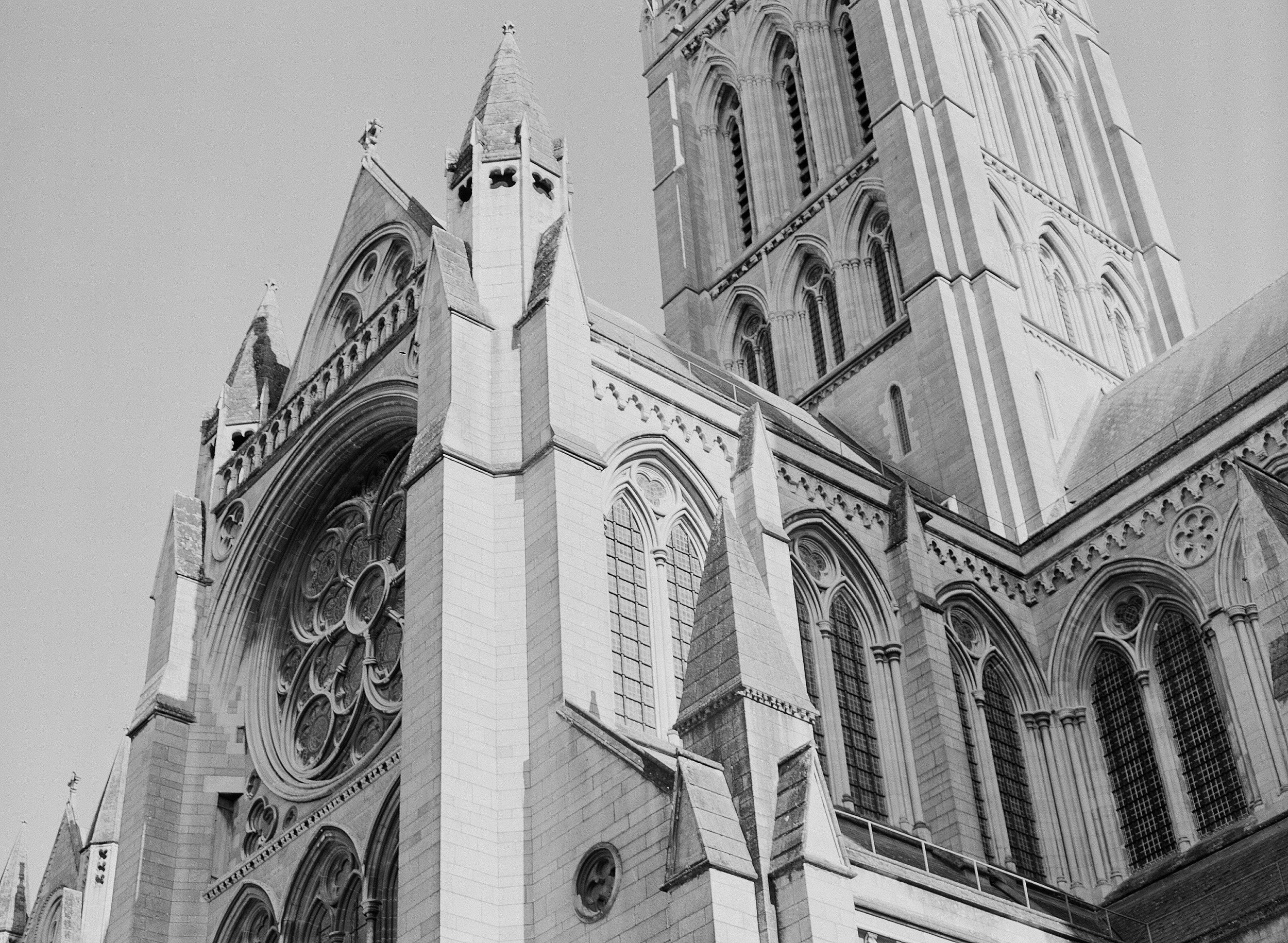
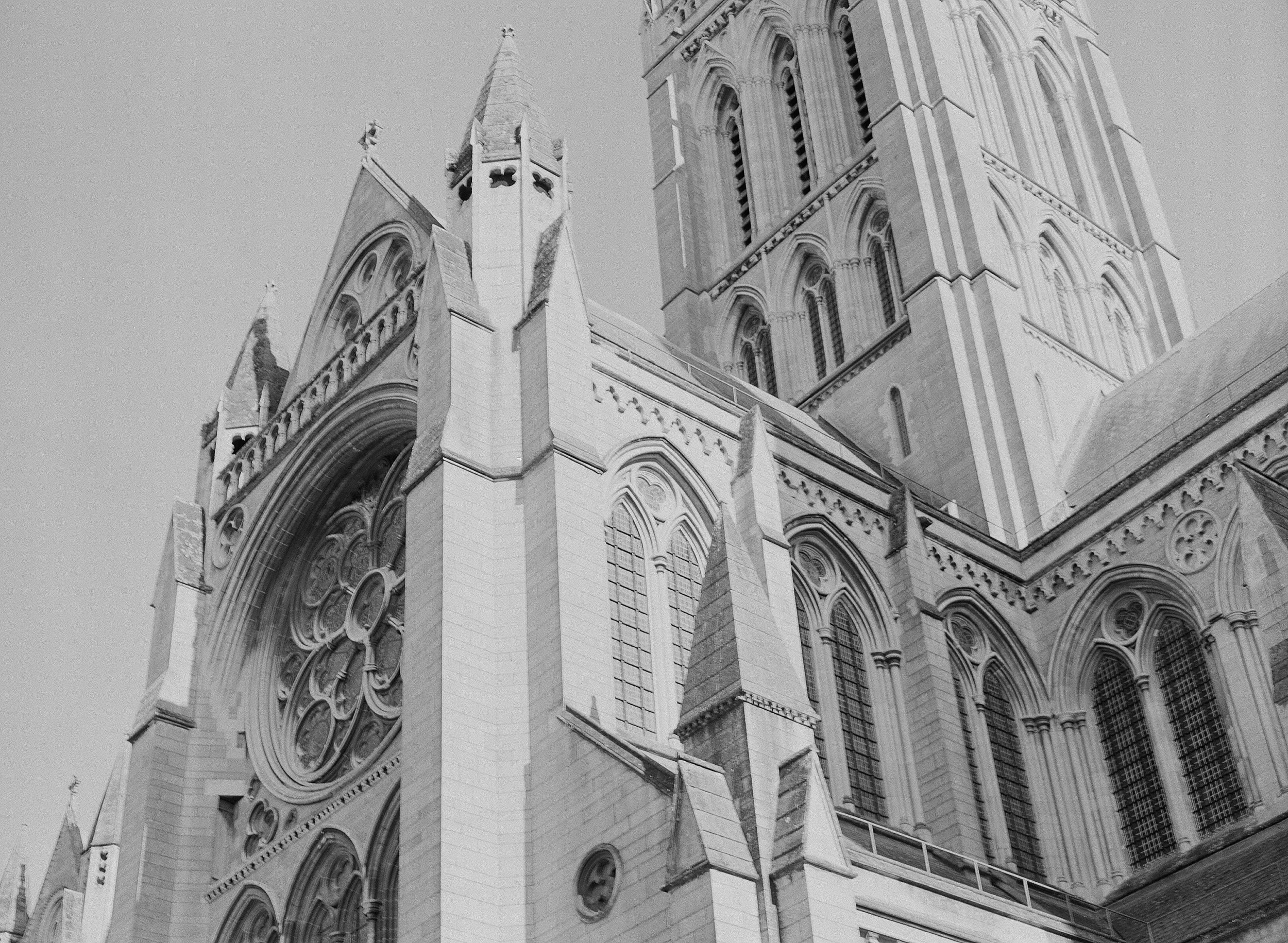
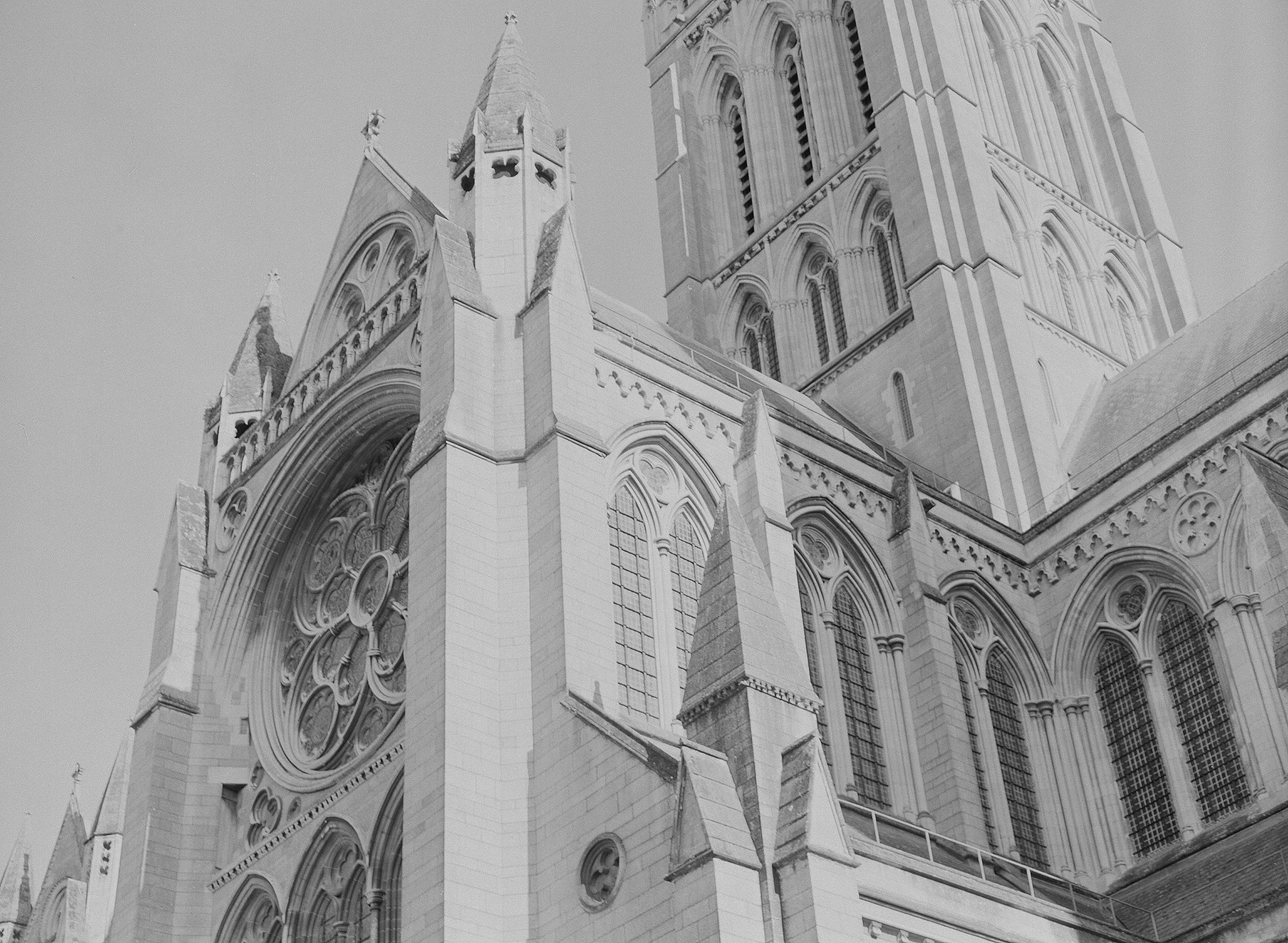
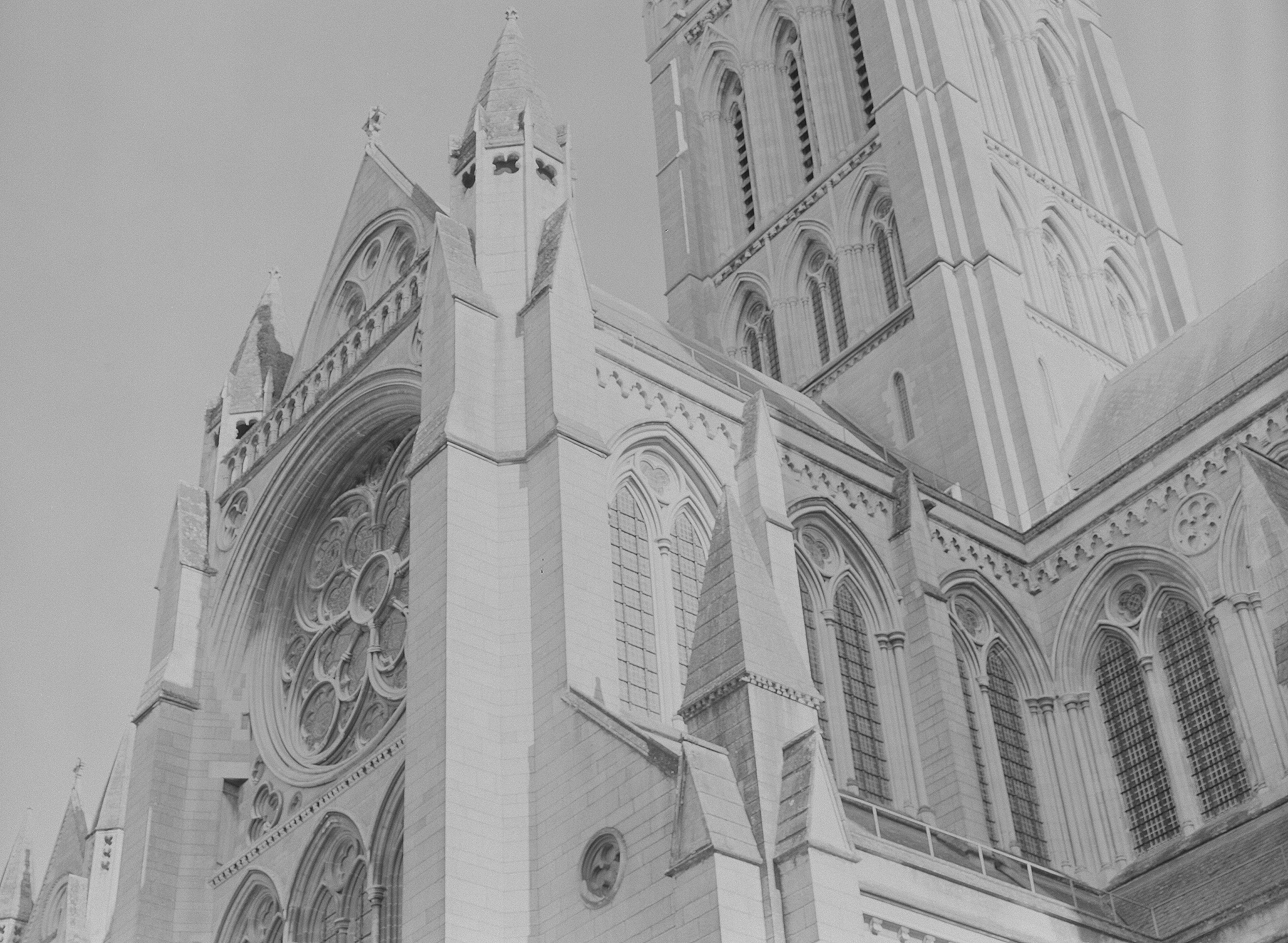
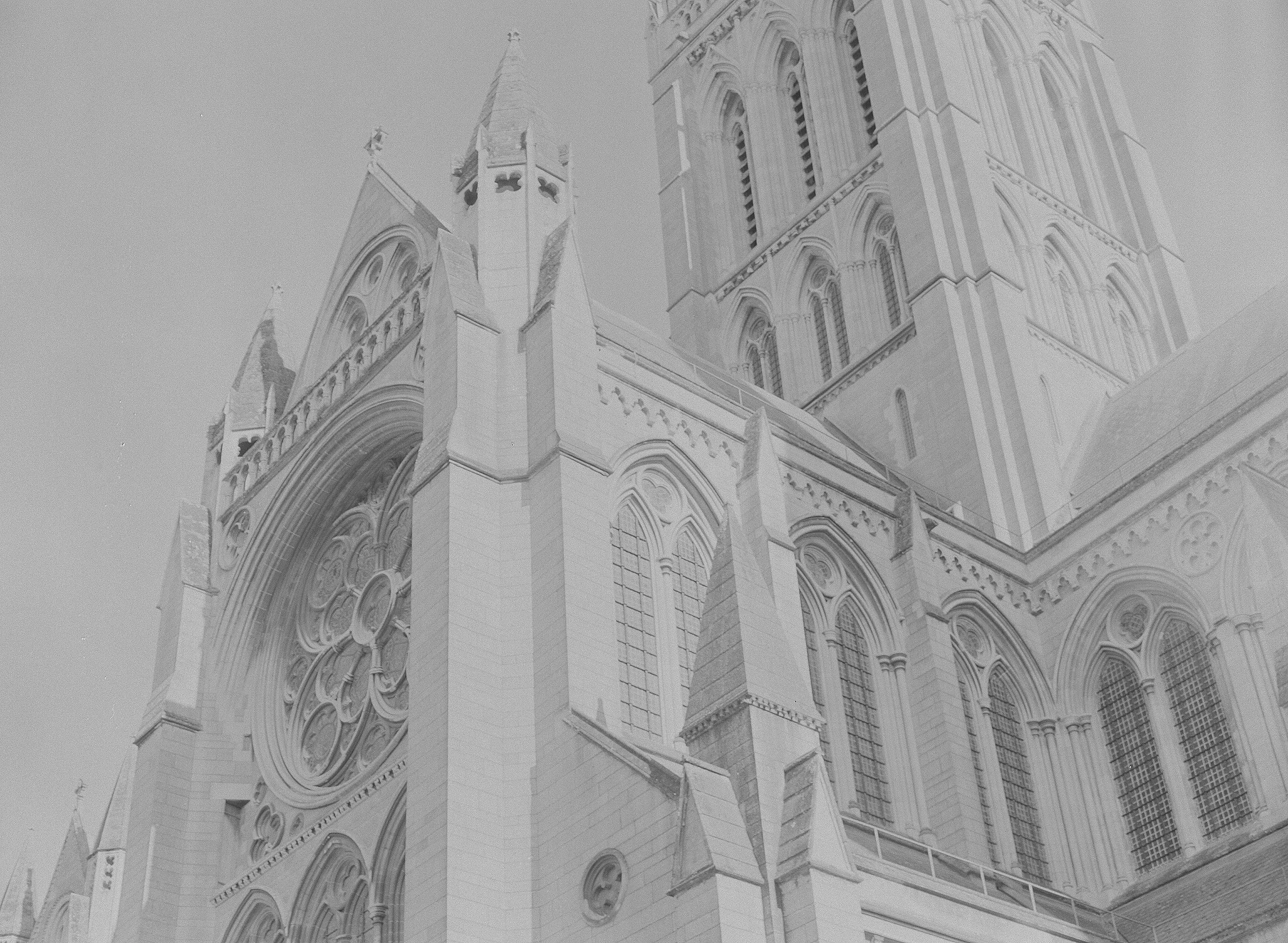
Ignoring the light leak caused by user error over three frames we can get a good idea of how the film handles different light levels. For the entire test we metered for the shadows.
The scene was very contrasty so its not surprising the results are quite extreme.
Looking at the image shot at 6400, four stops underexposed, we can see we’ve almost lost a lot of shadow details but not all, and there is likely room to under expose further, though this would likely result in a complete loss of details in this area. Also because we shot in bright sunlight, we’re still able to get a pleasant image, just with heaps of contrast. Shooting in a flatter, less contrasty situation would likely just result in a muddy image
The highlights have now been brought back into the correct range and have been exposed correctly, this is because the bright sunlight was giving this side of the cathedral an extra few stops of light. This is therefor likely how the image would have been exposed had we metered for the highlights.
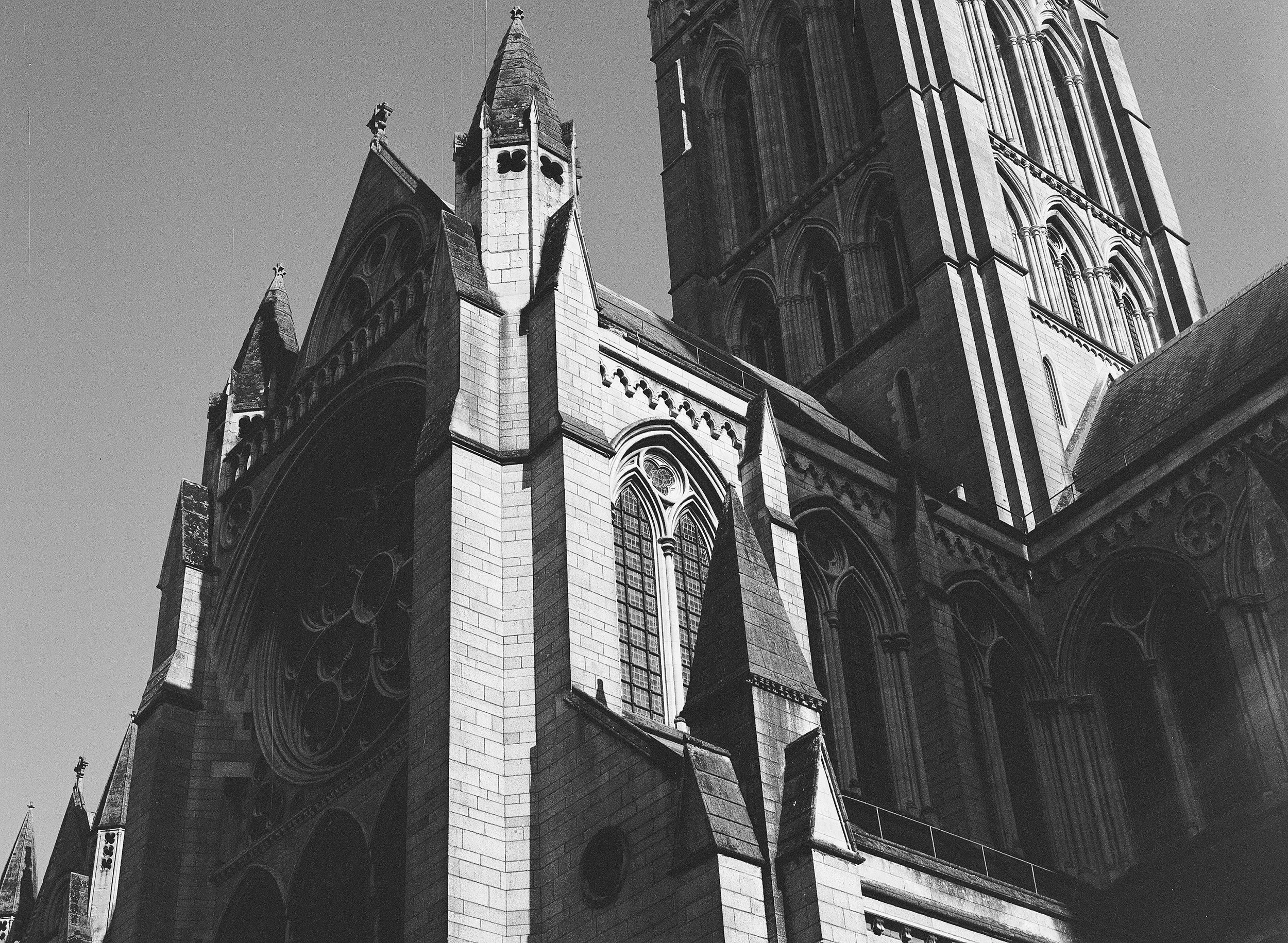
Shot at 6400
Comparing this to the box speed image, shot at the films native 400 iso, we can see we have less contrast, as the shadows are now correctly exposed, and the highlights have retained details as to be expected from a negative film.
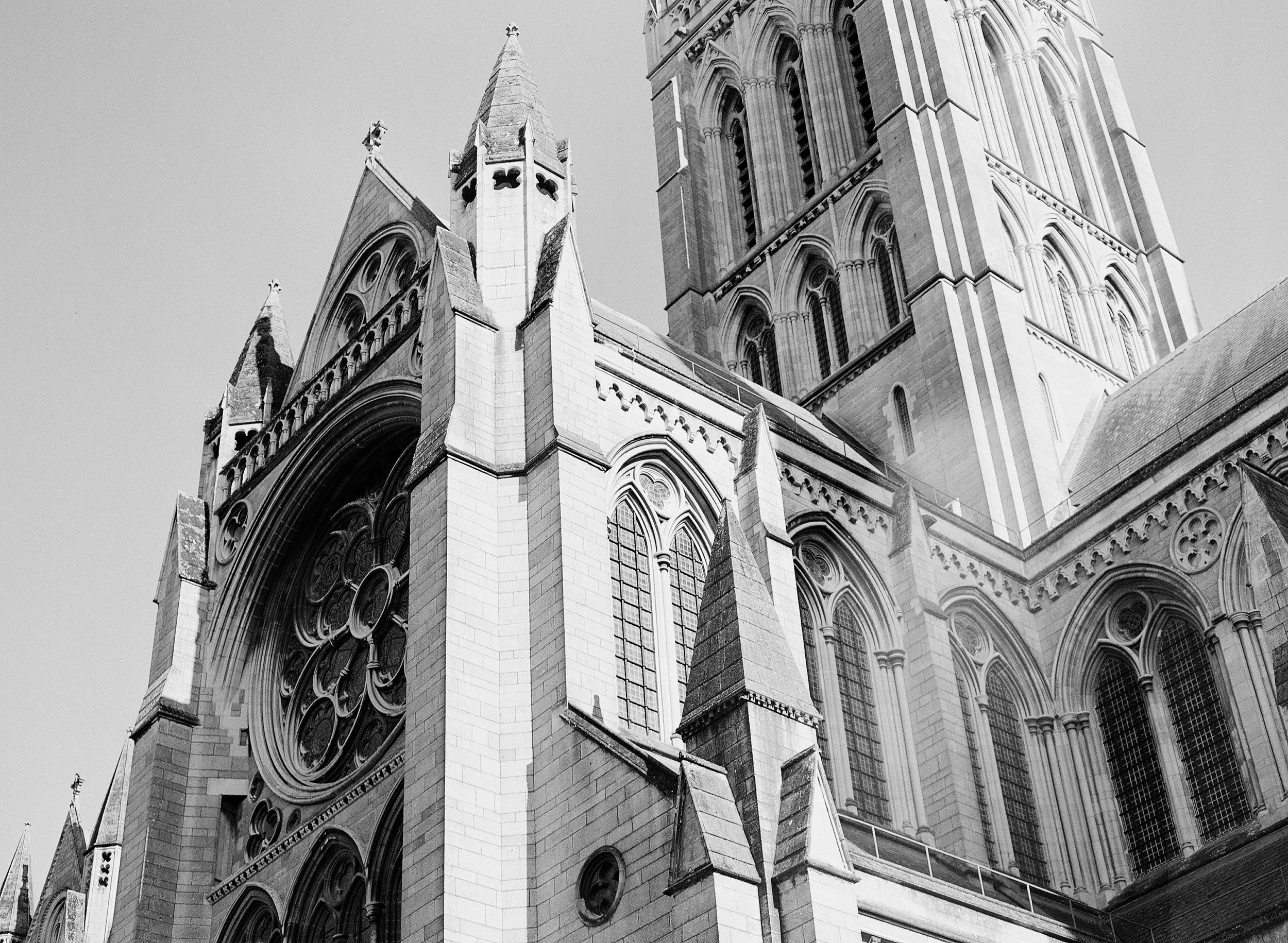
Shot at 400, box speed.
We can see all the details on the wall on the right hand side of the image, making out the stain glass window better than we could when underexposed. The highlights do feel like they are on the cusp of loosing detail. Remember we exposed for the shadows and then stopped down, which means that in this image the shadows are exposed correctly and the highlights are a few stops over exposed. The grain is finer too and the soft midtones this film is known for can be clearly seen.
If I wasn’t testing the film and was going to take this exact image again, or at least a similar one where the stops between the highlights and shadows is this great I would likely meter for both and split the difference. I would then end up with an image like the 1600 or 3200 image from this test.
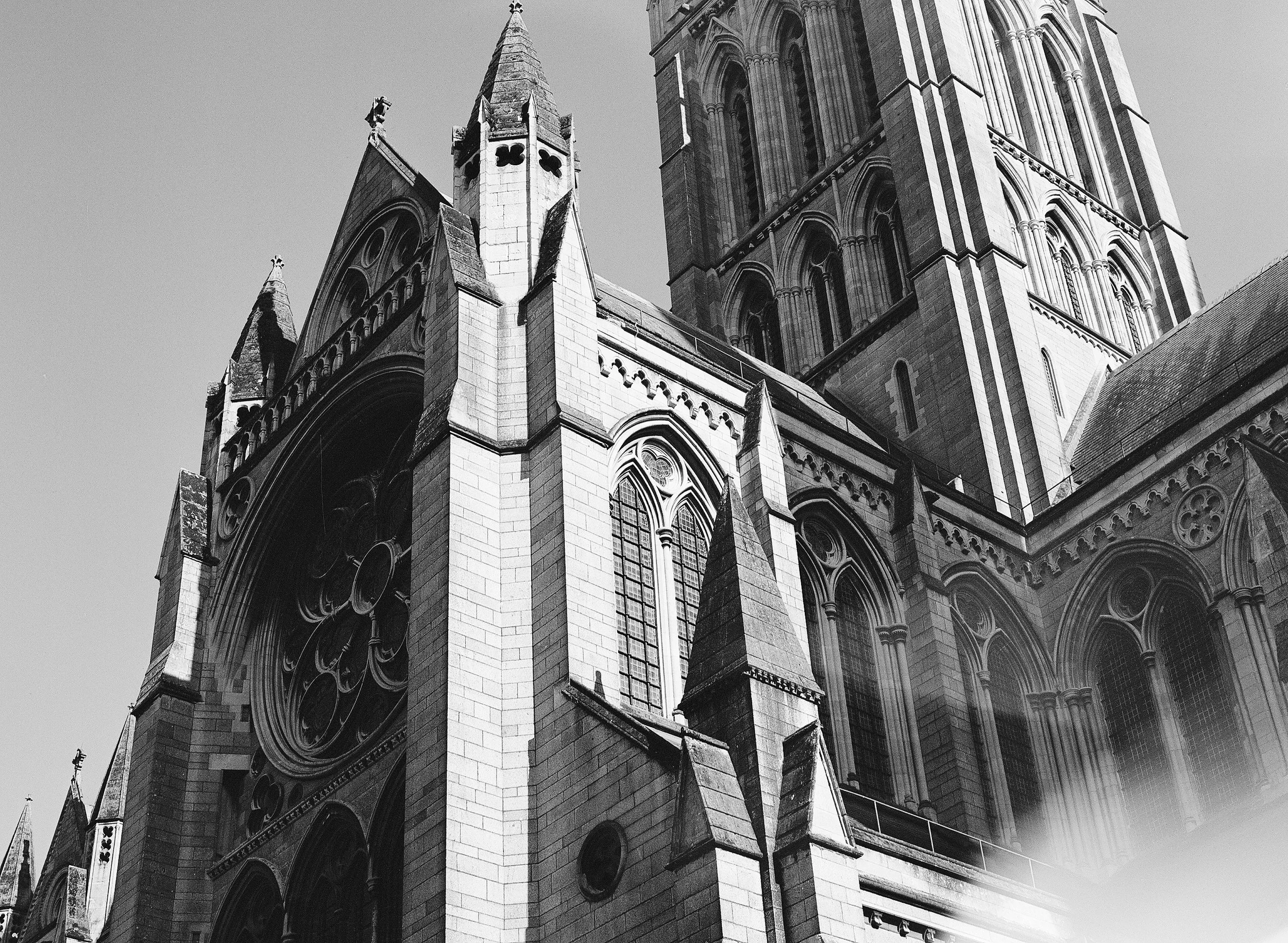
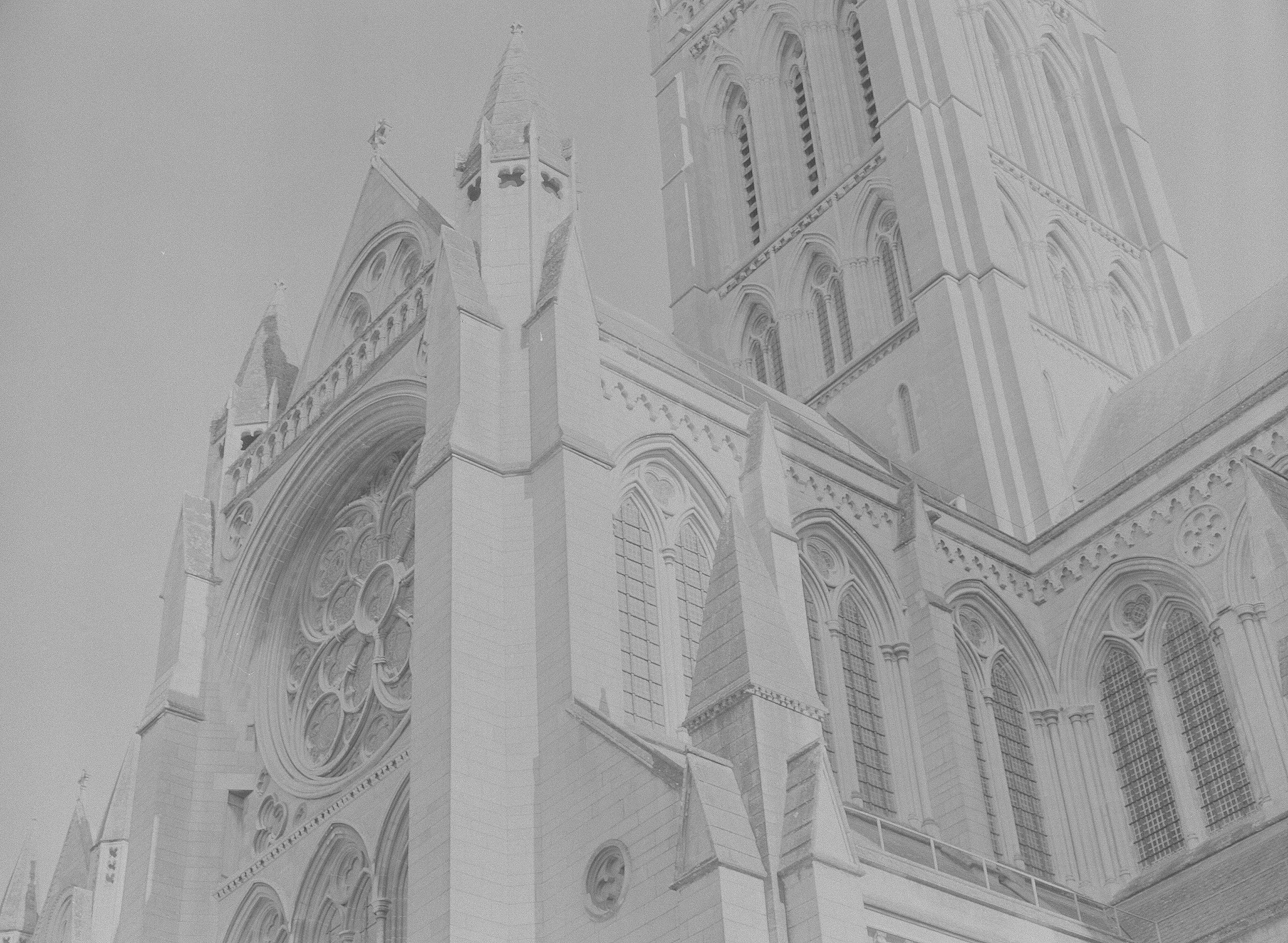
Shot at 3200
Here the shadows and the highlights are equal distance on the scale from 400, with the shadows being three stops underexposed and the highlights being two stops overexposed.
Ignoring the unfortunate light leak I think this would be the best balance and its possible that using the cameras internal light meter this would be the balanced image we would get.
Looking at the overexposed images its clear that the most overexposed images are technically quite poor, but we’ll take a look at the one shot at ISO 12.
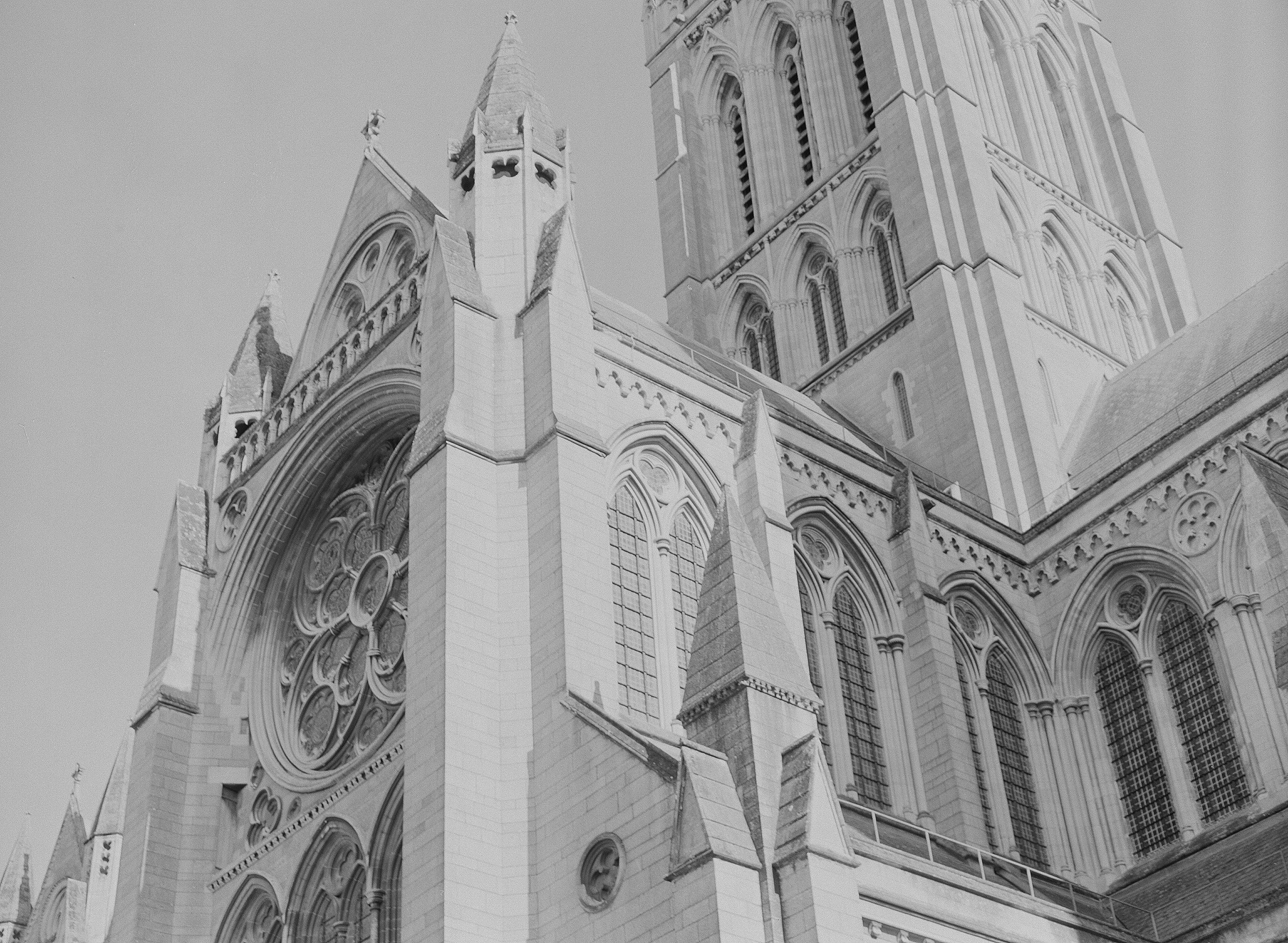
Shot at 12
So things have started to get a bit milky. The shadows are now overexposed 5 stops but are retaining good details, albeit quite flat details. The highlights are holding on to details but very much by the skin of their teeth. The grain is ultra fine. I think this image could still be edited to a more pleasing image but its not the greatest starting point.
The main take away is how most of the highlights still retain some slight detail, incredible considering they are now roughly eight stops over exposed.
We wont look too closely at the images after this one as then even the light from the shadows is too much and the image gets flatter while the highlight detail starts to reach its limit.
Conclusion:
What a brilliant film! None of the photos taken between 6400 and 25 are unusable and couldn’t be rescued with a quick edit (light leak aside). That’s nine usable ISOs which this film can be shot at and changed mid roll.
We’re going to continue doing tests like this, think of this as a part 1, for part 2 we’ll likely set up a few still life shots, perhaps on 35mm this time and use the cameras internal light meter to make the initial reading and go from there, as metering for the shadows did give this test an advantage as negative film prefers being over exposed, meaning we cold meter for the shadows somewhat safe in the knowledge we would have some highlight detail.
If you’re interested in running your own tests at home you can buy XP2 film from us here.